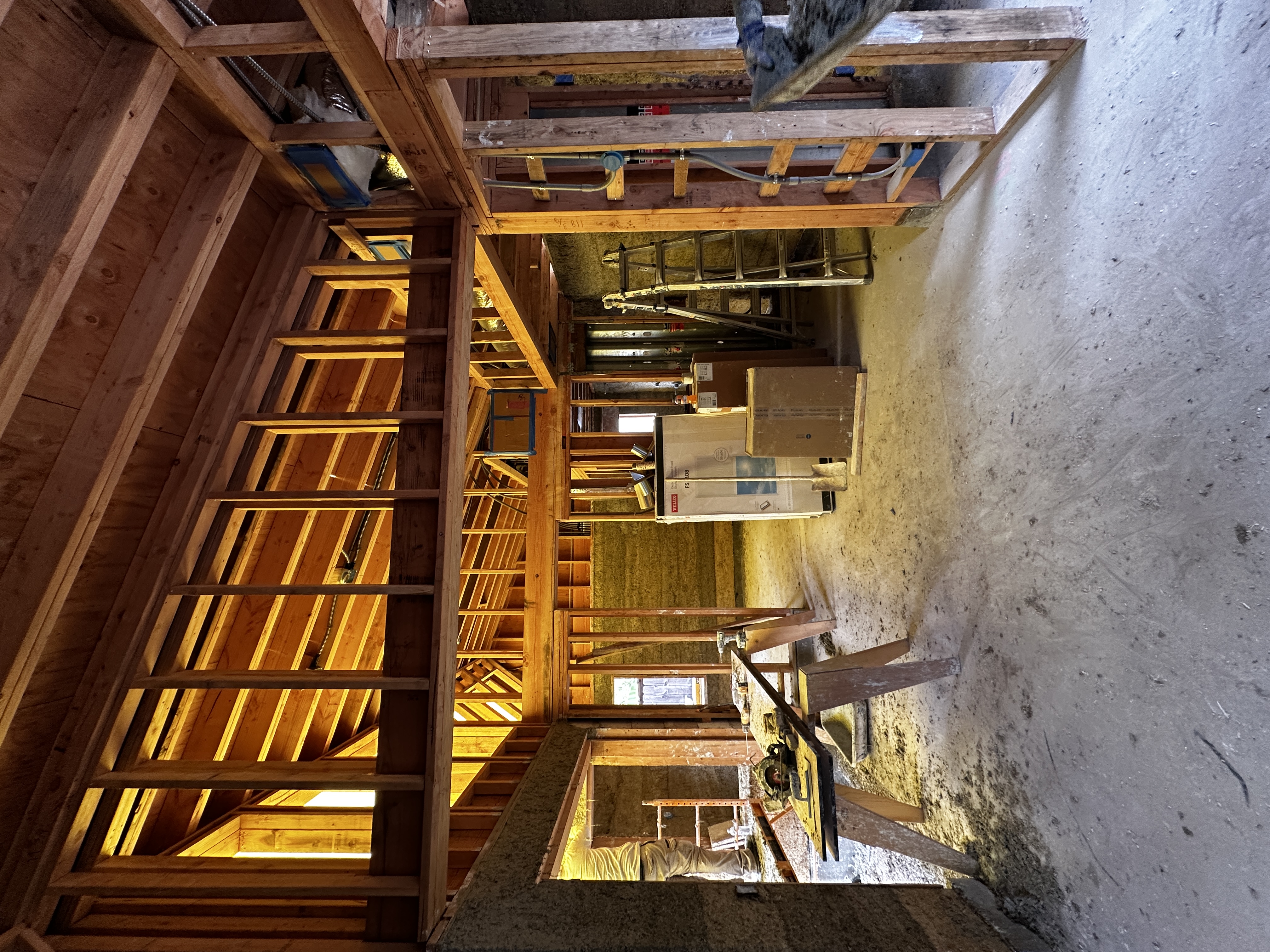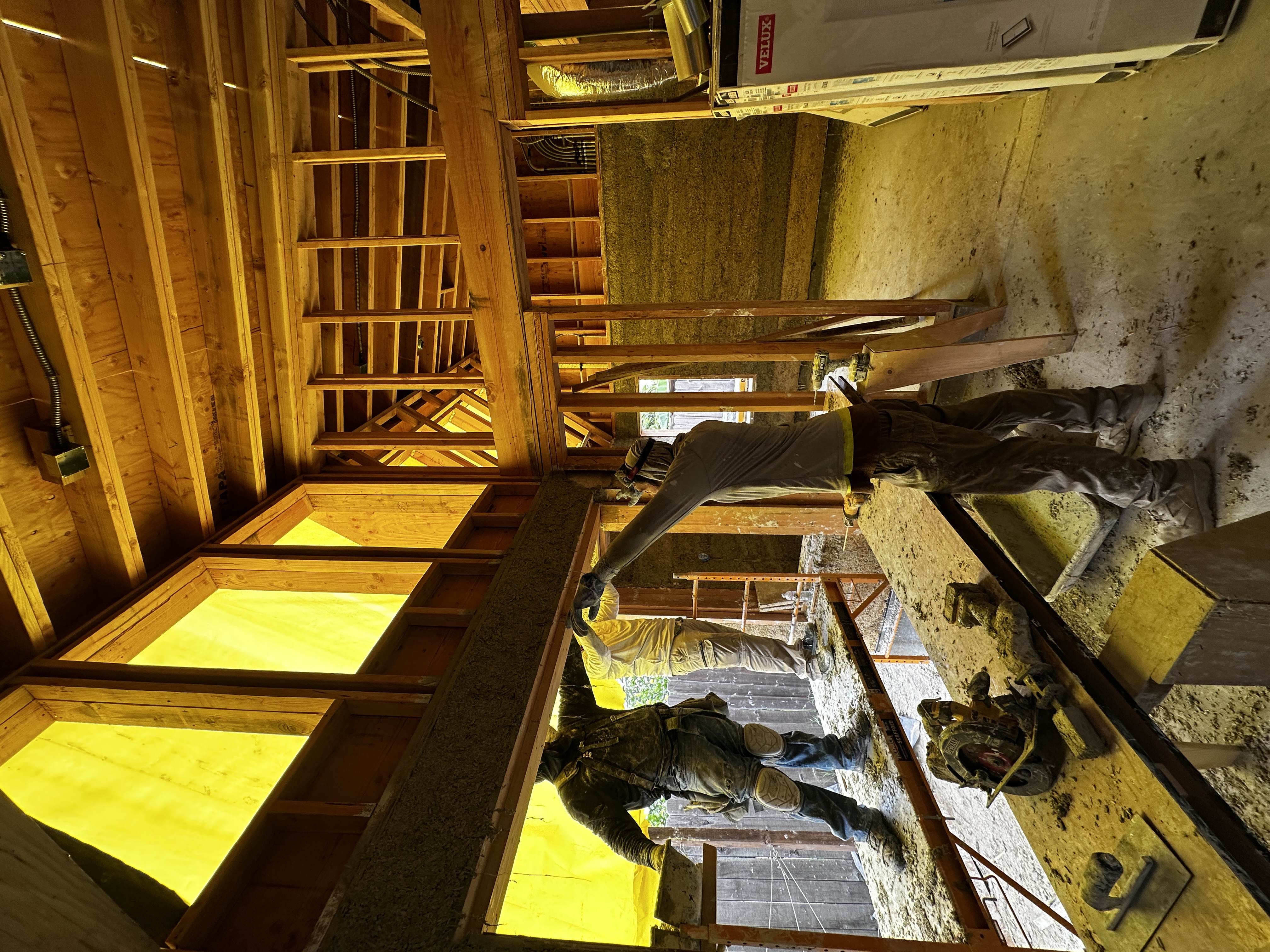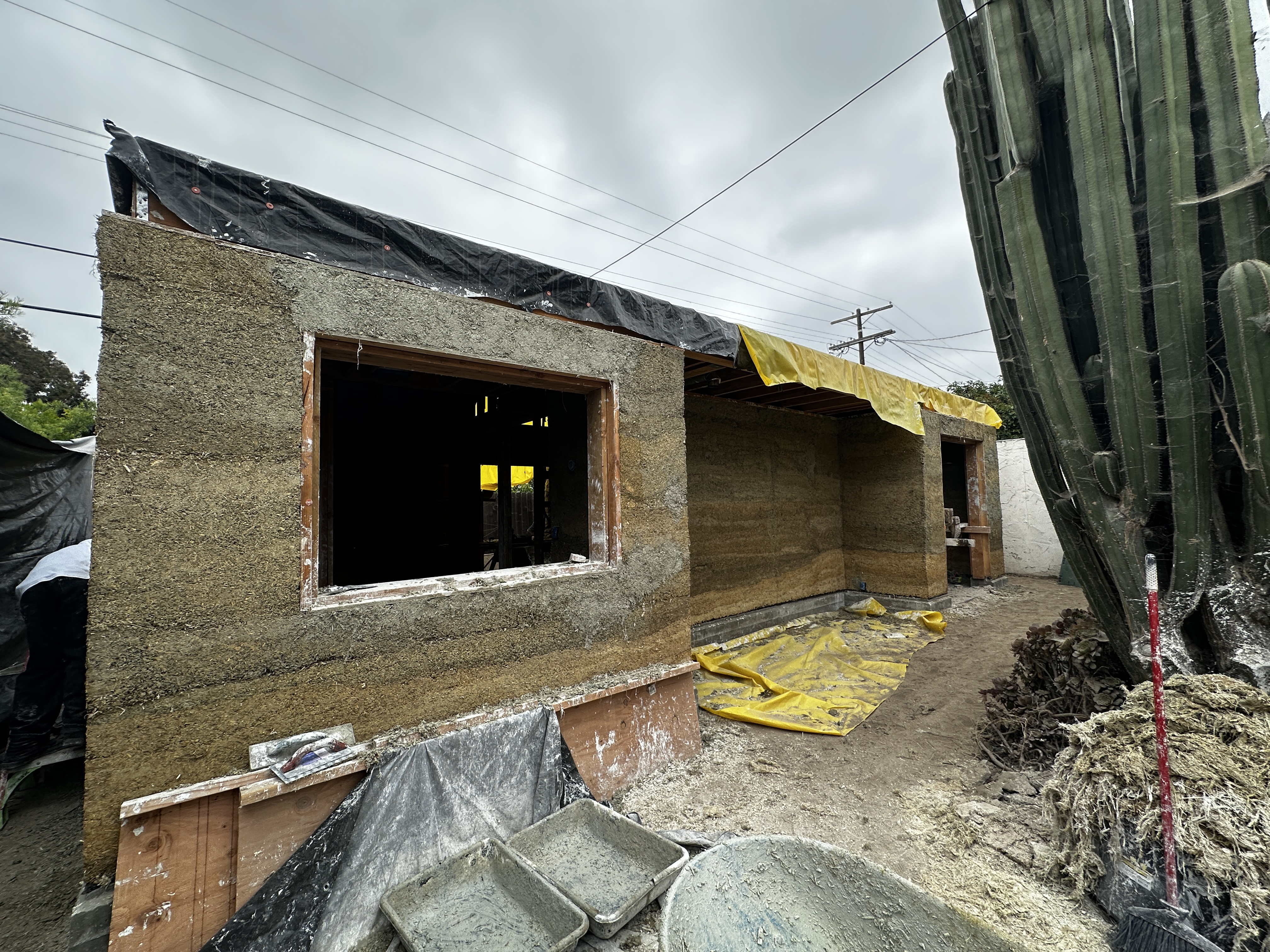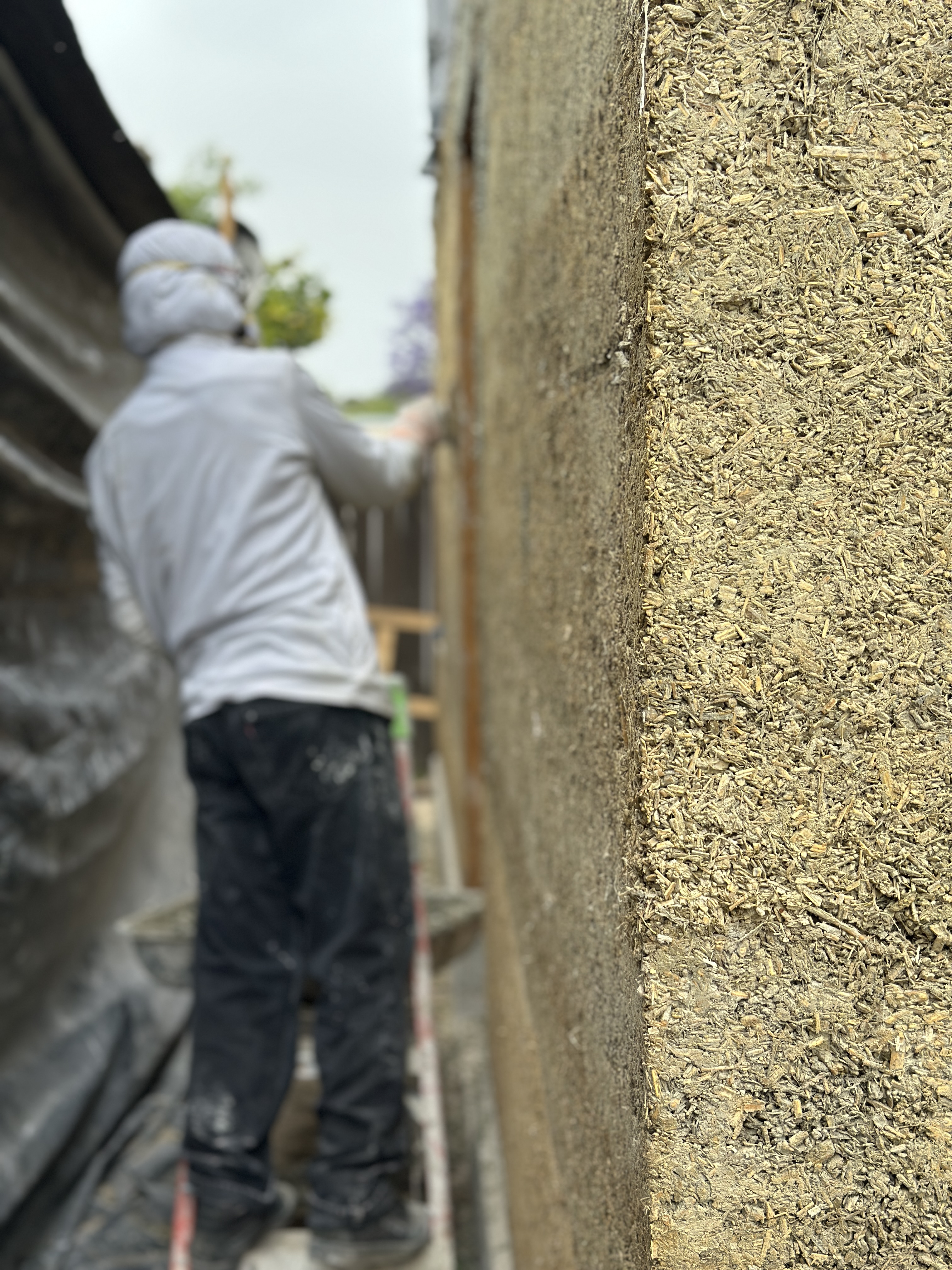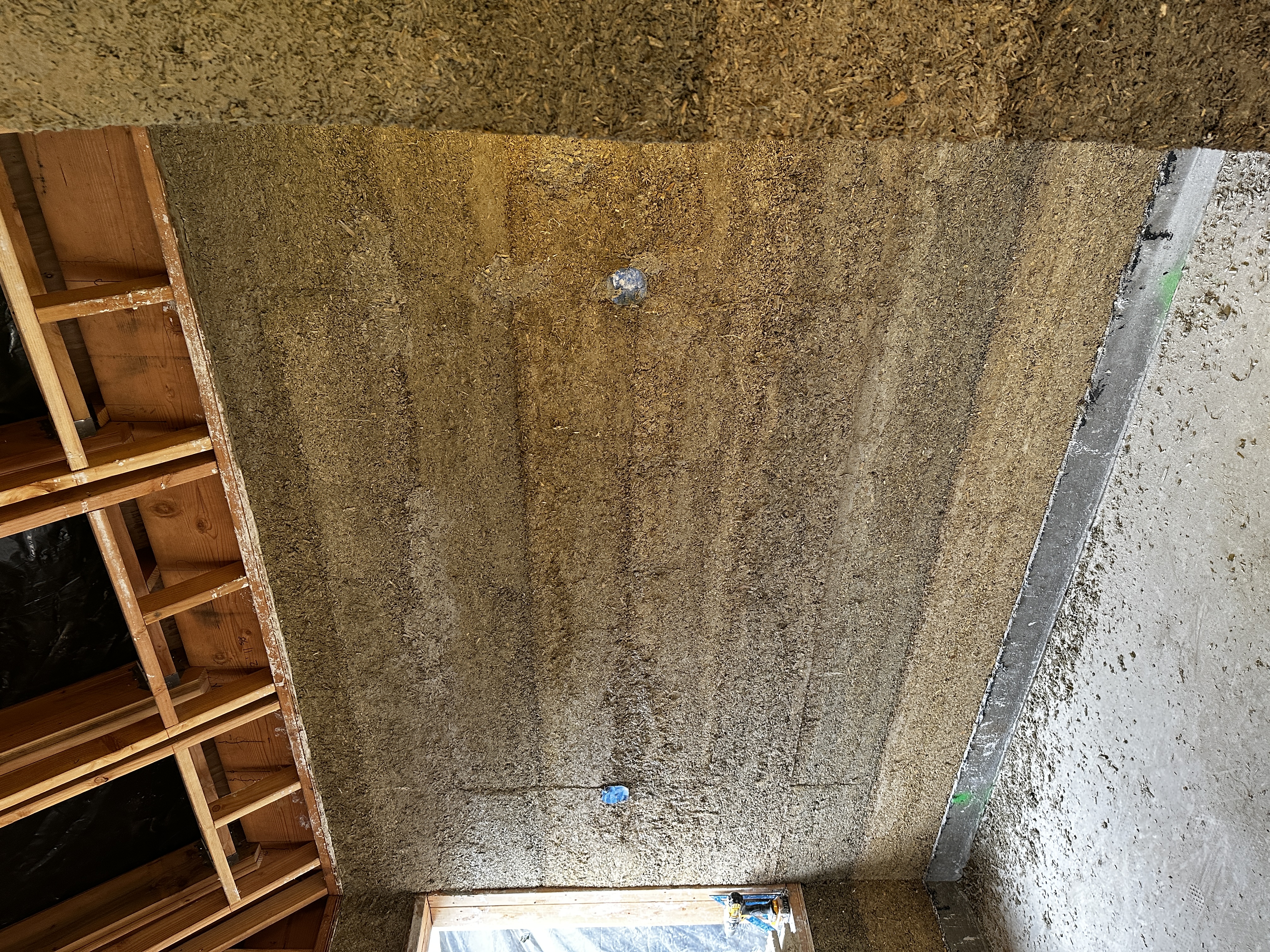
An architecturally designed ADU in the heart of Atwater Village, Los Angeles. Built with hempcrete -- a carbon-negative, fire-resistant material that has been used for centuries and is now making history in LA County.
The Project
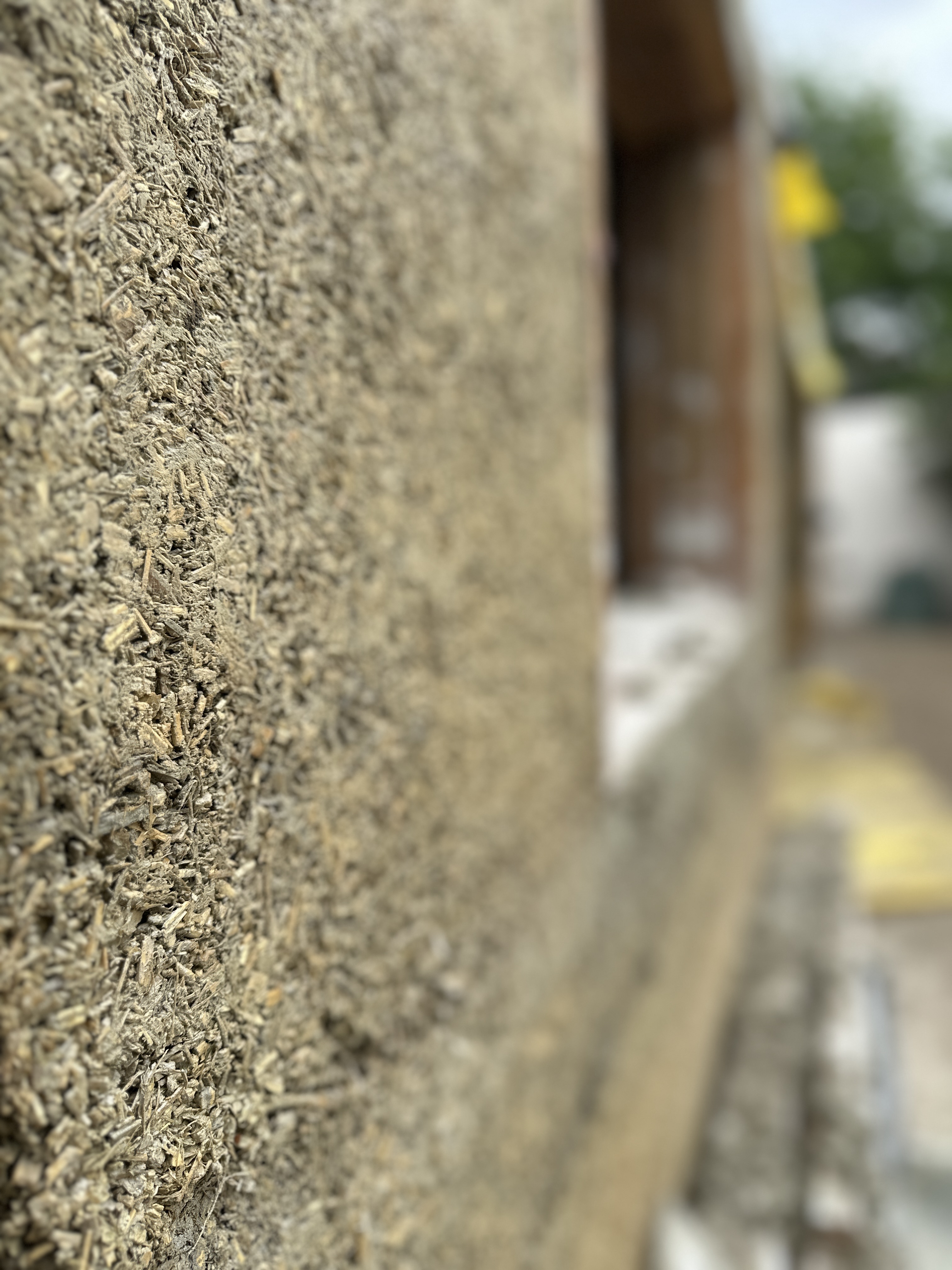
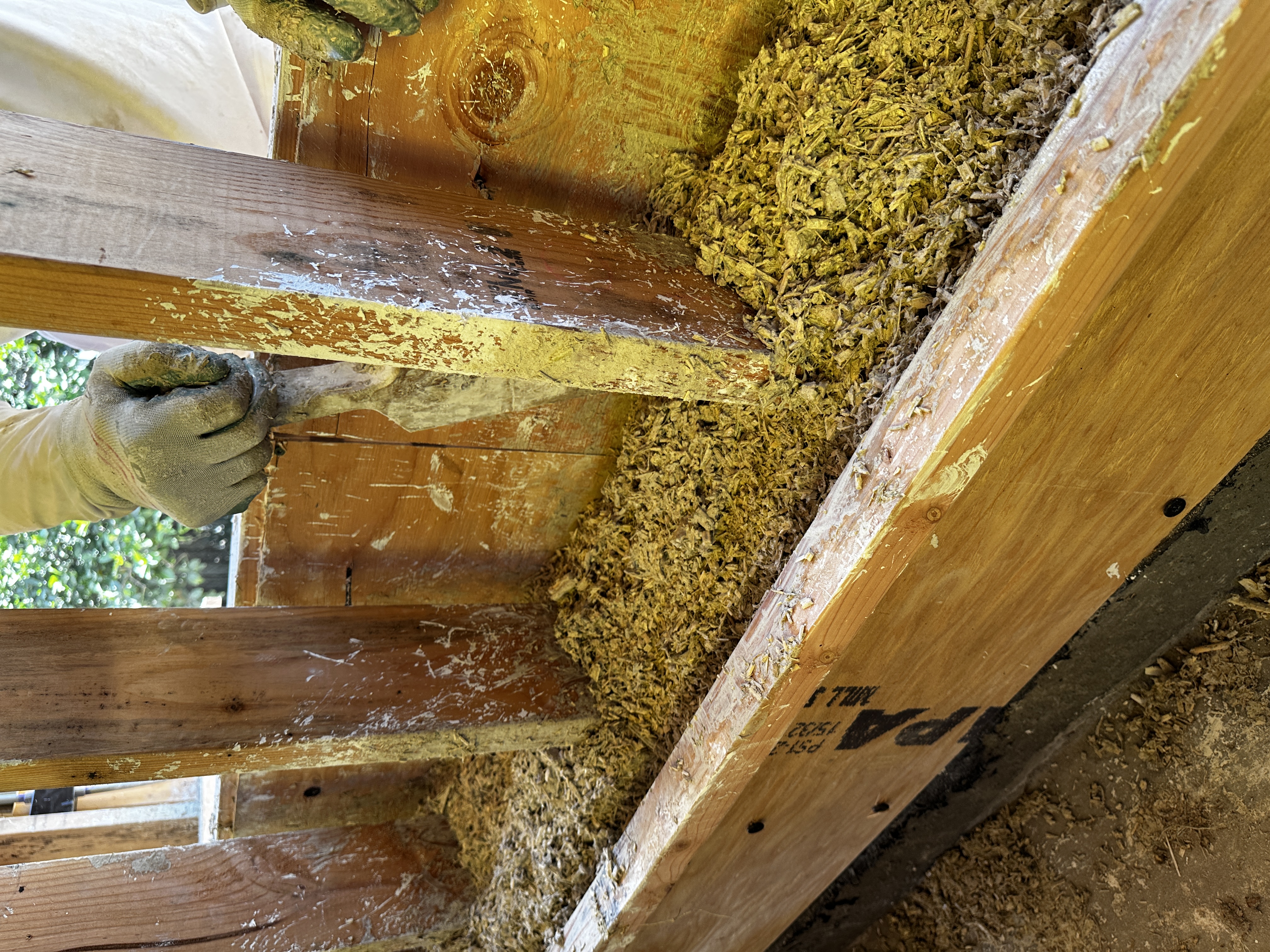
The Atwater Village Project is the first hempcrete structure to receive a building permit in Los Angeles County. Located in the creative, tree-lined neighborhood of Atwater Village, this architecturally designed Accessory Dwelling Unit replaces conventional concrete block construction with hempcrete walls -- using the hemp plant's woody inner core mixed with lime binder to create a material that is stronger, healthier, and better for the planet.
This is more than a building. It is a proof of concept for a new way of constructing homes in Southern California -- one that addresses wildfire resilience, carbon emissions, and indoor air quality in a single material system.
The Build
Why Hempcrete
Every material choice in The Atwater Village Project was deliberate. Hempcrete delivers performance that conventional materials simply cannot match.
Hempcrete is non-combustible and self-extinguishing. It chars rather than burns, slowing fire spread and producing no toxic fumes. Tested and proven to withstand direct flame for over 2 hours.
Hemp absorbs 8-15 tonnes of CO2 per hectare during growth. The finished hempcrete wall continues to sequester carbon over its lifetime as the lime mineralizes, locking in approximately 165kg of CO2 per cubic meter.
Unlike sealed conventional walls, hempcrete actively regulates humidity -- absorbing excess moisture and releasing it as conditions change. This creates naturally balanced indoor air and eliminates conditions where mold can grow.
The lime binder in hempcrete continues to petrify and carbonate for decades after construction. Unlike concrete, which degrades, hempcrete walls become harder and more durable as they age.
Hempcrete provides consistent thermal performance with an R-value of approximately R-2 per inch. But its real advantage is thermal mass -- it buffers temperature swings, reducing HVAC demand dramatically.
The alkaline lime environment in hempcrete is naturally hostile to mold, mildew, insects, and rodents. No chemical treatments required. The wall itself is the pest management system.
Built for LA
Los Angeles County's recent wildfire devastation has forced a reckoning with how we build. As fire codes tighten and rebuilding regulations expand in 2026, hempcrete offers a material that doesn't just meet the new standards -- it exceeds them by a wide margin.
The Atwater Village Project demonstrates that fire-resistant, sustainable construction is not a future ideal. It is being built right now, right here in LA.
Hempcrete doesn't just resist fire. It resists the entire cycle of build-burn-rebuild that has defined construction in fire-prone regions for too long.
Harry Hemp, Hemp Homes by HarryCarbon Footprint Comparison
Sustainability
Hemp grows to full maturity in just four months, absorbing 8 to 15 tonnes of CO2 per hectare -- more than any commercial crop and more than most forests. Once mixed with lime and placed in walls, hempcrete continues to sequester carbon for decades as the lime carbonates.
The result is a building material with a negative carbon lifecycle. The Atwater Village Project will lock away more CO2 than was produced to build it. Every hempcrete wall is a small act of atmospheric repair.
Get Started
Whether you're an architect, builder, or homeowner considering hempcrete for your next project, Harry can help. Book a free consultation to learn how hempcrete could work for your build.
(717) 317-4382 | heyharry@hemphomes.com